IBM Earnings Forecast: October 22, 2026Will IBM Stock Rise After Earnings?
Our research points toward a positive opening and a positive close for IBM on October 22. See the estimated chances of a gain, how much IBM has risen after past earnings announcements, and the risks investors should consider.
Past earnings events analyzed
Estimated positive return likelihood
Estimated positive close likelihood
Will IBM stock rise on October 22?
IBM enters Thursday's trading session with a positive outlook in our analysis. The estimated chance of finishing above the opening price is 86.1% after the first 30 minutes and 93.4% at the end of the trading day.
The full-day outlook is stronger than the opening forecast. However, these percentages come from an experimental forecasting system. They are not guaranteed outcomes or proven real-world probabilities.
A positive return means IBM trades above its 9:30 AM opening price at the time measured. It does not necessarily mean the stock is above the previous day's closing price.
How has IBM performed throughout earnings day?
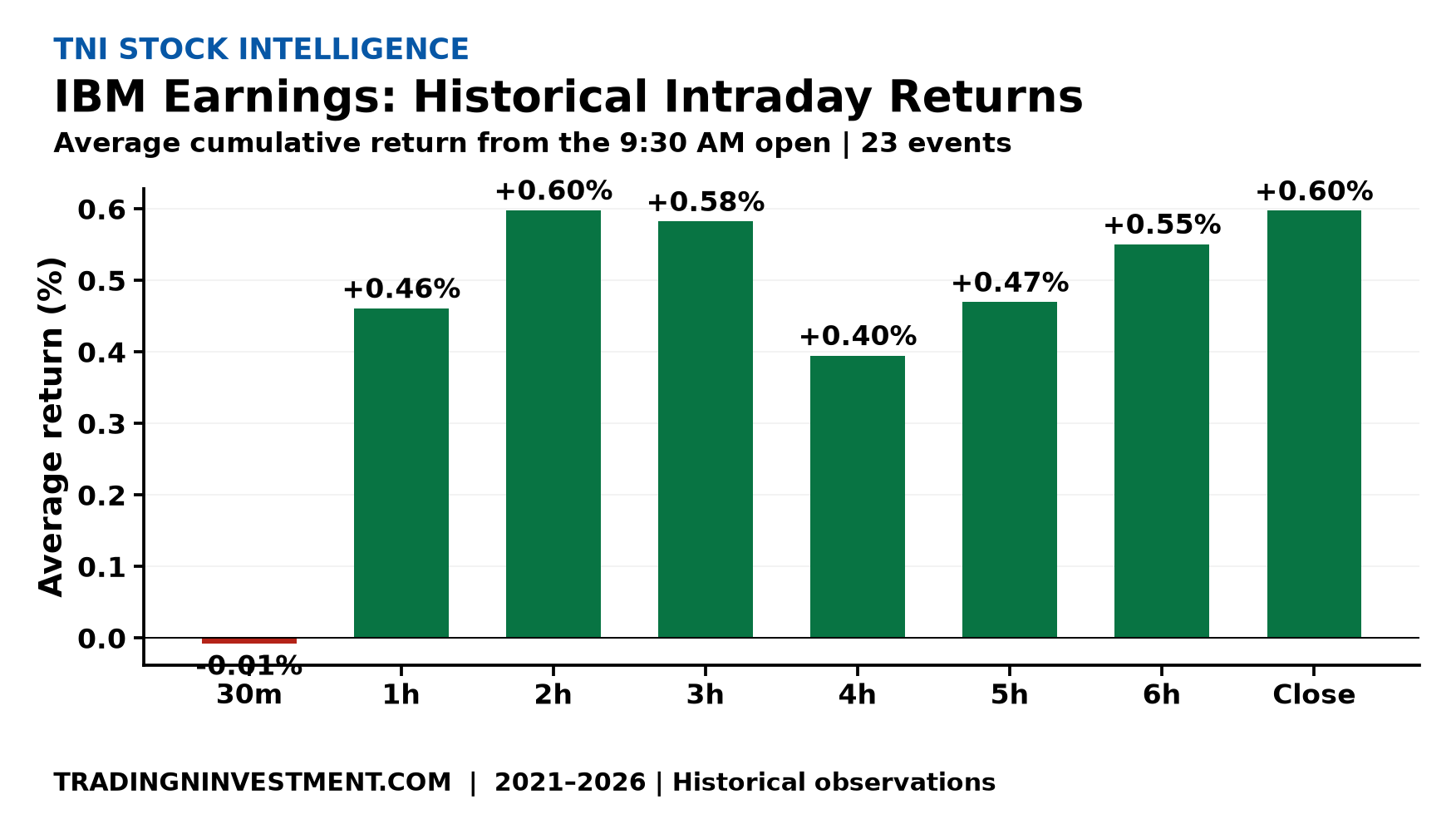
We examined 23 previous IBM earnings trading sessions. Across all of them, including days when IBM fell, the average first-30-minute return was nearly flat at −0.01%. The average return by the closing bell was +0.60%.
This chart shows how IBM's average earnings-day performance changed from the opening bell to the close. Returns are measured against that day's opening price.
How much could IBM move if the stock rises?
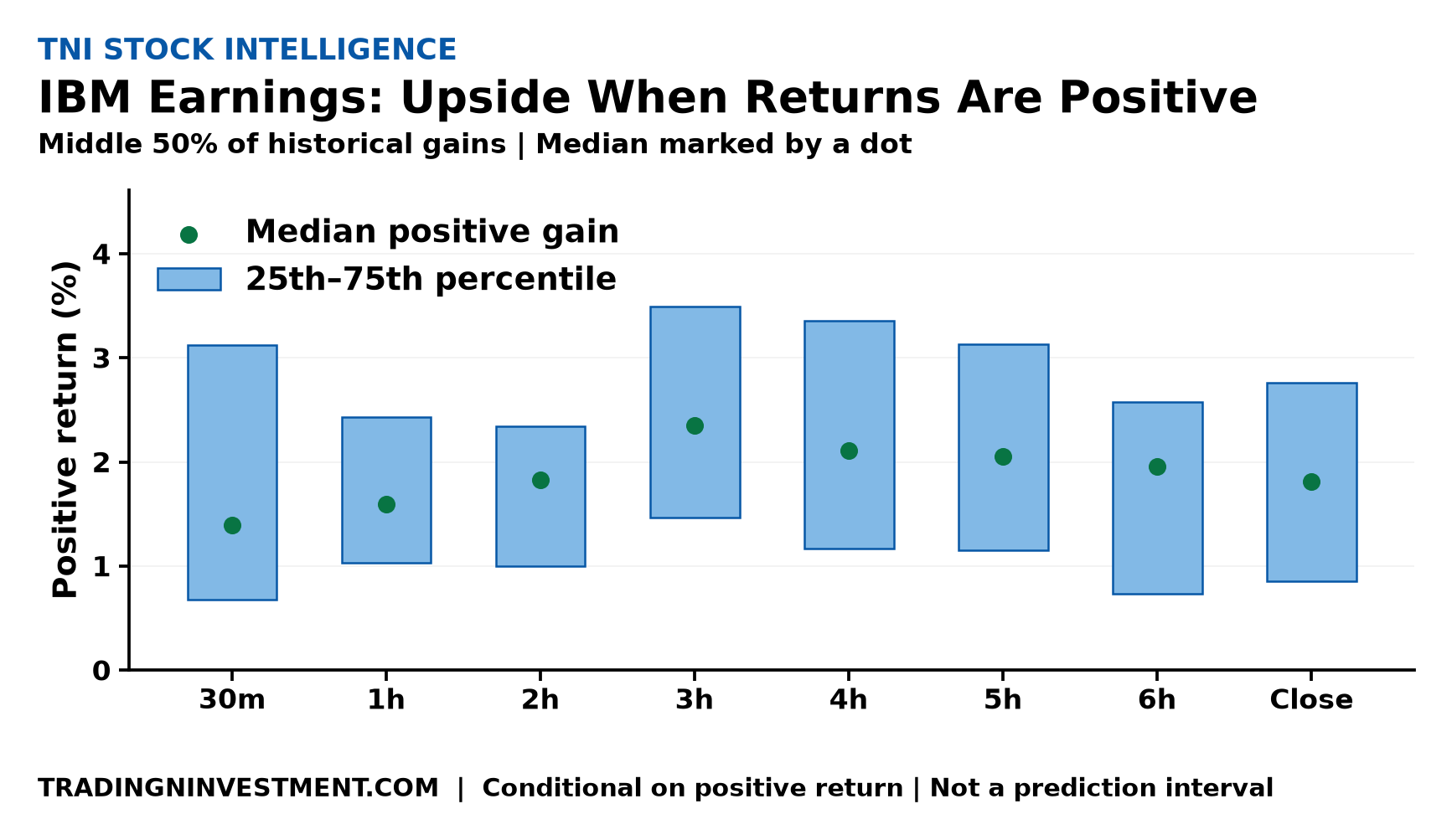
On past earnings days when IBM rose during the first 30 minutes, its average gain was +2.03%. The middle half of those positive returns fell between +0.68% and +3.12%.
When IBM finished an earnings session above its opening price, the average full-day gain was +2.27%. The middle half of positive closing returns ranged from +0.86% to +2.76%.
These are historical gains on positive days, not predictions that IBM will rise by those amounts tomorrow. IBM can also decline, even when the outlook is positive.
How much confidence should readers place in this outlook?
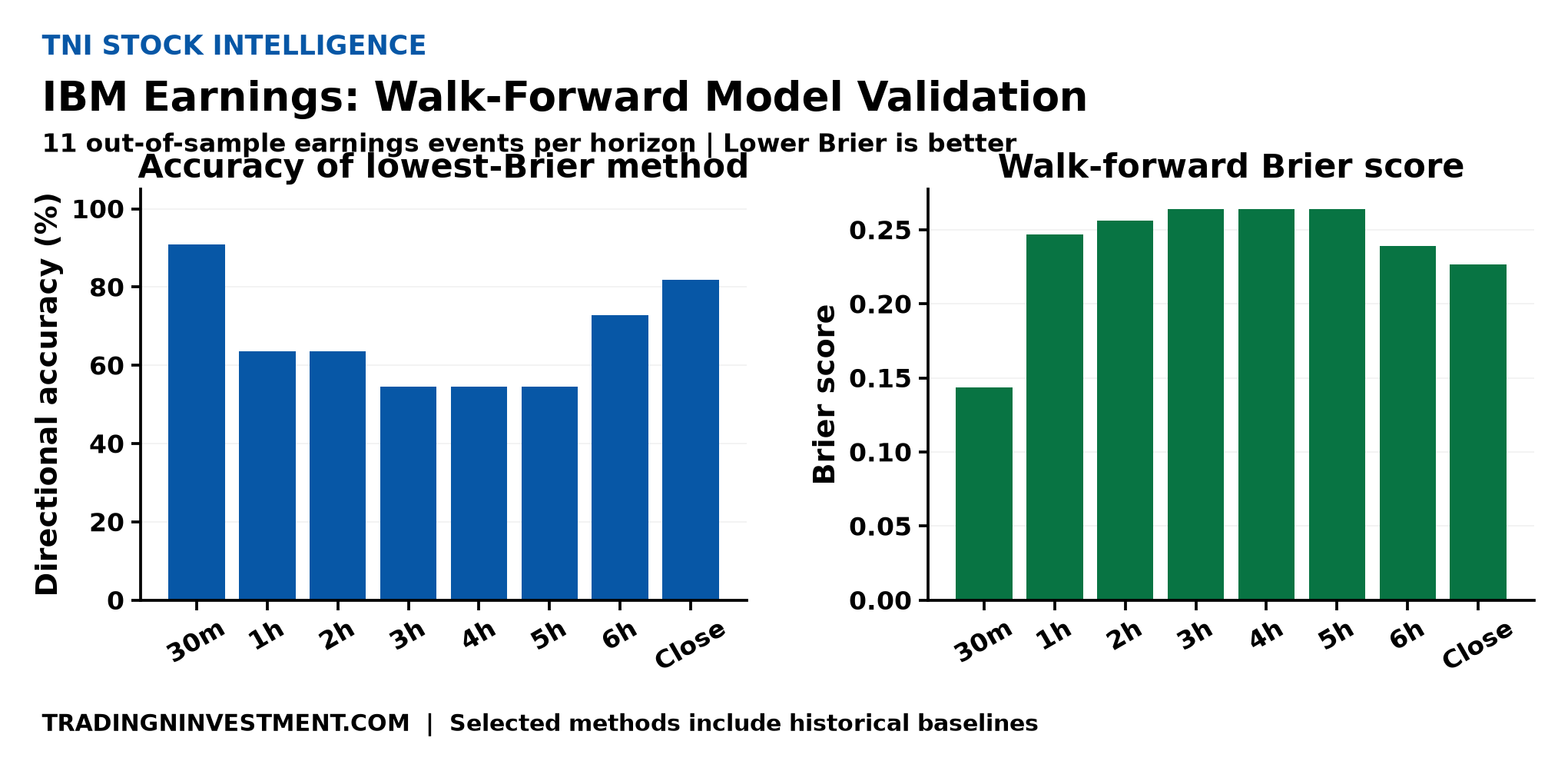
We checked the forecasting approach against 11 earlier earnings events that were held back during each test. The selected forecasts identified the correct direction in 10 of 11 opening-period cases and 9 of 11 full-day cases.
Those results are encouraging but come from very few observations. The chart below shows the testing results. Past accuracy does not mean tomorrow's forecast will be correct.
Why could IBM behave differently tomorrow?
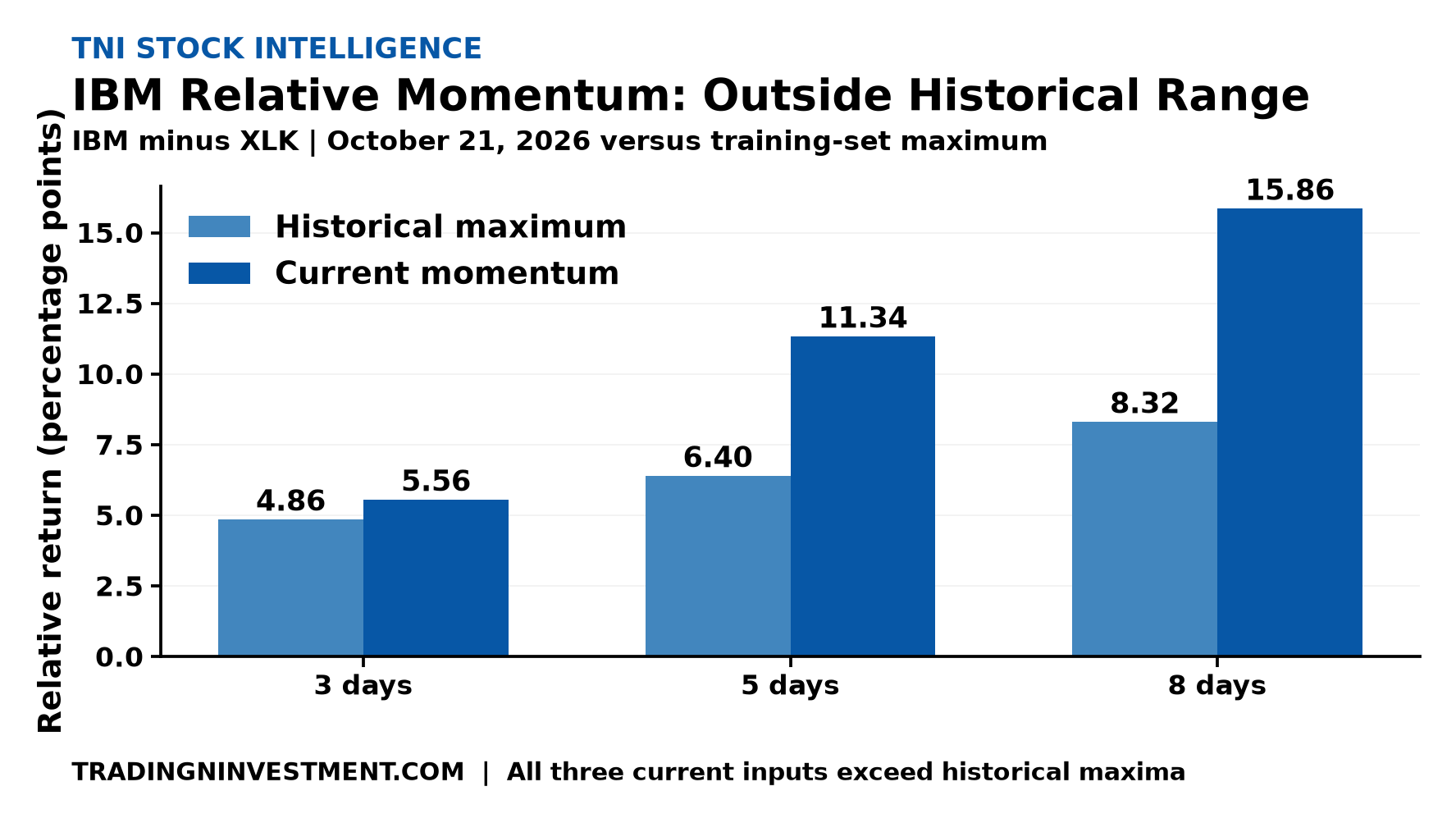
IBM's recent share-price strength has been unusually large compared with the earlier periods used in this research. That means tomorrow's market conditions are not a close match for many past examples.
The chart shows why this matters. An unusually strong rally can continue, but it can also reverse sharply after an earnings announcement. This is an important reason not to treat the forecast as certain.
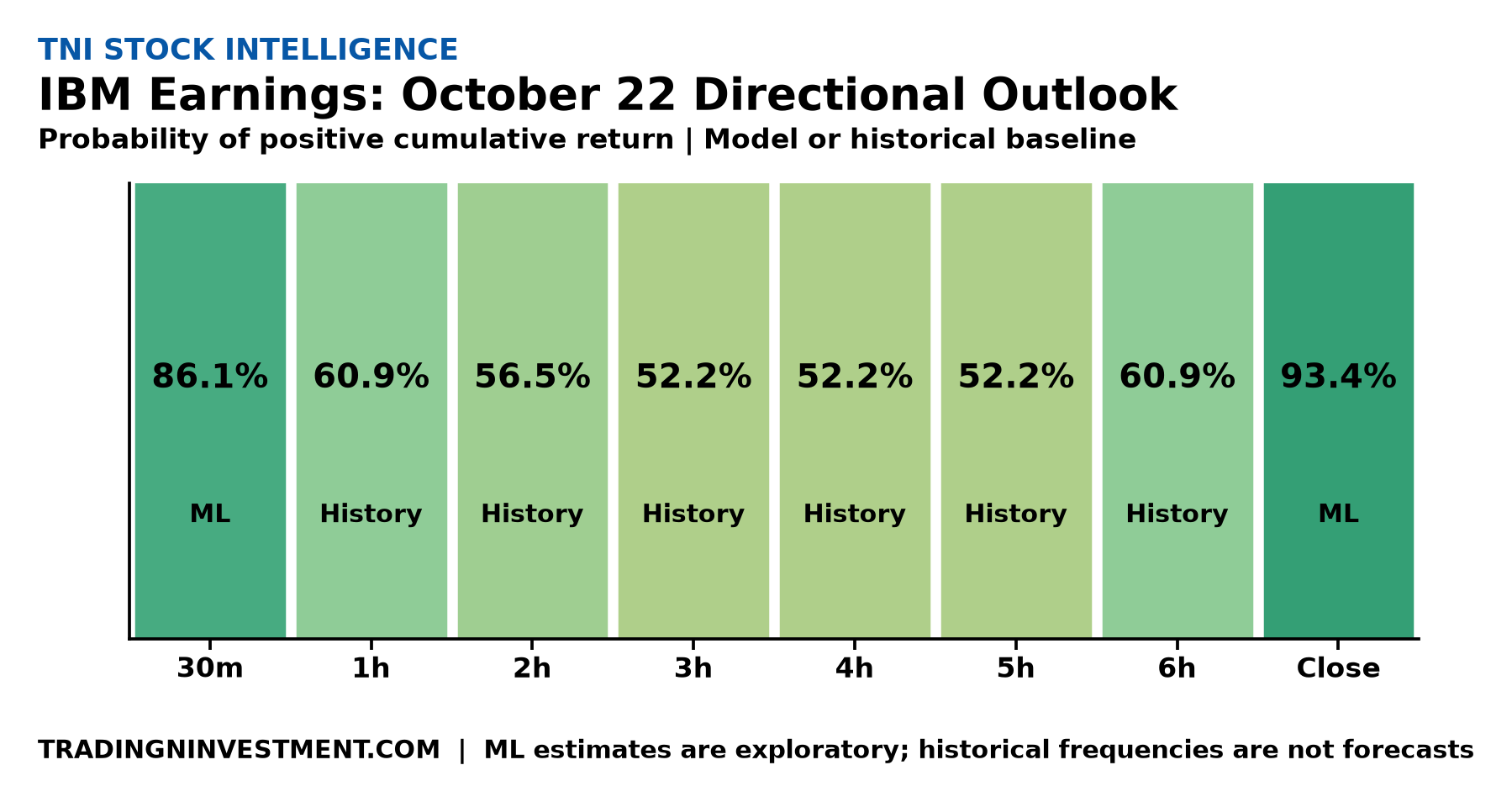
IBM's October 22 outlook at a glance
The chart compares two forecasts for October 22: an 86.1% estimated chance of a positive return after 30 minutes and a 93.4% estimated chance of a positive return by the closing bell.
The figures shown for the hours in between are different: they represent how often IBM rose at those times during past earnings sessions. They are not separate forecasts for tomorrow.
How we prepared this forecast — and why it may be wrong
We studied IBM's price movements across 23 earnings trading sessions from 2021 through 2026. We measured returns from the regular 9:30 AM opening price using five-minute market observations.
We used machine learning to examine IBM's recent performance compared with technology stocks, movements in the broader market, and market volatility. We also tested predictions against historical earnings events that were not used in each training period.
Only 23 earnings sessions were available, and the forecast methods were compared using just 11 historical test events. IBM's current momentum also exceeds earlier examples. The 86.1% and 93.4% figures are uncalibrated estimates, not dependable real-world odds. The prediction may be wrong.
Explore More Market Research
This research is educational and does not constitute investment advice. Historical results do not guarantee future returns.